
Most people in Northeast Florida take their Christmas lights down in the first two weeks of January. The weekend after New Year's is the most common choice, and plenty of households wait until just after January 6, the traditional end of the twelve days of Christmas. Unless your neighborhood sets a deadline, there is no wrong date. What matters more here is how long the lights sit out in the weather, how they come off the house, and where they spend the summer.
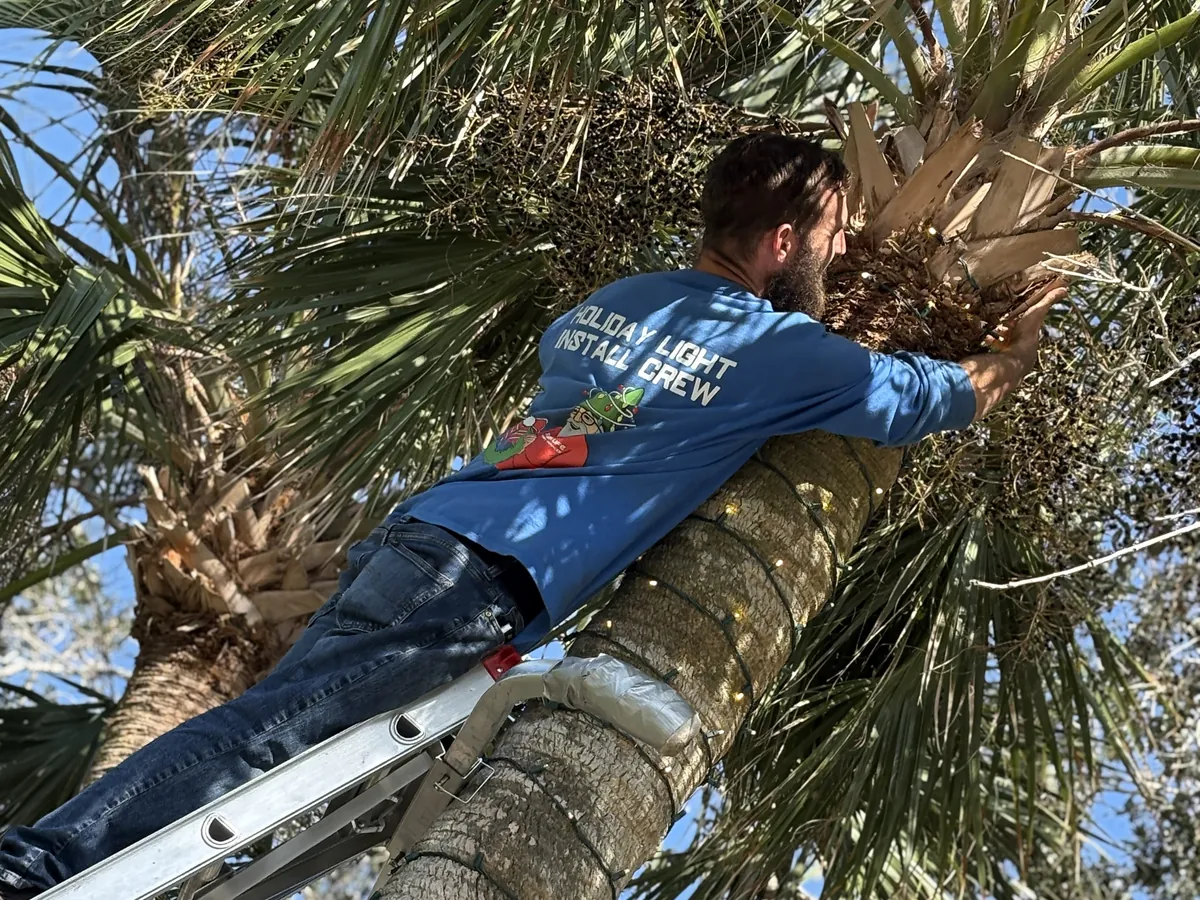
When most people take their lights down
There are three usual windows:
- New Year's weekend. People are home, the weather is often mild, and the house feels done with the holidays.
- Right after January 6. The traditional finish, popular with families who keep the tree up until Epiphany.
- Mid-January. A reasonable outer limit. Past this point, lights that are still up start to look forgotten rather than festive.
Businesses usually come down sooner. A storefront or restaurant still lit in the second half of January sends the wrong message to customers walking in.
If you live in a community with a homeowners association, check the covenants or the community newsletter before you pick a date. Many associations set a day by which holiday decorations have to be removed, and some send notices when it passes.
Why leaving lights up too long is hard on them in Florida
A winter in Clay, Duval or St. Johns County is gentle on people and still tough on outdoor lighting. The sun stays strong enough through December and January to keep working on the plastic. UV breaks down the jacket on the wire and the clips that hold it, and both slowly turn chalky and brittle. A clip that has sat on a south-facing gutter for an extra month is the one that snaps next November.
Winter cold fronts bring gusty wind and rain. Wind whips strands against gutters and fascia, working clips loose and rubbing the wire. Rain finds its way into sockets and plug connections, where it causes corrosion and trips GFCI outlets. Every extra week outside adds a little of that wear, so the lights you take down promptly are the ones that come back on cleanly next year.
What a careful takedown involves
Unclip, don't pull. Tugging a strand off a gutter bends the gutter lip and rips clips out from under shingles, which can crack shingle tabs, especially on older roofs. Release each clip by hand and lift it out gently.
Pick a dry day, and a dry hour. January mornings often leave dew on the roof. Wait until the afternoon, when shingles and ladder rungs have dried.
Work the ladder properly. Have someone foot the ladder, keep it off the gutters, and move it rather than reaching. Set it on a board if it stands in a soft flower bed.
Unwind trees in reverse. Follow the strand back the way it went on instead of dragging it through the branches. Pulling tears bark, snaps small limbs and shreds the wire.
Lower strands, don't drop them. A coil thrown off the roof lands in the shrubs and the mulch, and the bulbs take the hit.
Keep track of where everything came from. Take down one section at a time, the front gutter, then the porch columns, then the oak by the driveway, and keep each section's strands and clips together before moving on.
Storing lights in a Florida garage or attic: what goes wrong
The usual storage spots are the worst places for lights in this climate. Attics in Northeast Florida get extremely hot through the summer, and garages are hot and humid for months. That heat softens wire insulation, then it hardens and cracks as it cools. Cardboard boxes soak up moisture and grow mildew, and they make good homes for palmetto bugs and mice. Strands thrown in loose come out as one knot.
To pack so they survive:
- Wind each strand loosely around a piece of stiff cardboard or a cord reel, not tight around your hand.
- Use plastic bins with snug lids instead of cardboard, and drop in a few silica gel packs.
- Put each strand's clips, spare bulbs and spare fuses in a zip bag stored with it.
- Store the bins inside the air-conditioned part of the house if you can, such as a closet or under a bed. If they have to go in the garage, keep them on a shelf, off the floor and away from the water heater.
Test and label before you pack
Ten minutes of testing now saves an evening of frustration in November. Plug in each strand before it goes in the bin. If a section is dark, check the small fuses in the plug and replace any loose or broken bulbs. If it still won't light, throw it out or mark it clearly so it doesn't get hung again.
Then label each strand or bag by where it went: "front gutter, left of garage," "porch columns," "palm by mailbox." Before you start taking anything down, take a few photos of the lit display from the street. Next year you will hang each strand in the place it was cut and sized for, without measuring again.
If your lights were installed by Green Life
You don't need to do any of the above. Removal is part of the season. We schedule removal in January, working around your preference for early or mid-month takedown, and we reach out to confirm your preferred takedown window once the season winds down. Takedown is careful removal from roofs, gutters and trees, protecting your property's exterior and landscaping. The details are on our maintenance and removal page.
Everything is packed and labeled during removal, so it's ready to go into seasonal storage or straight back into your bins. Storage is optional. Some clients prefer to keep their own lights at home, and we're happy to hand everything back after removal. If you choose seasonal storage, every box is labeled by section of your property and stored in controlled conditions away from Florida heat and humidity. We check strands during packing and again before next season's installation, and if something needs replacing, we let you know ahead of time.
If you are already thinking about next year's display, our article on when to book Christmas light installation explains how the calendar works.
Next step
If you would rather never do the takedown yourself, Green Life installs, maintains, removes and stores your lights as one service. See residential Christmas light installation or maintenance and removal, or call (904) 236-7780.